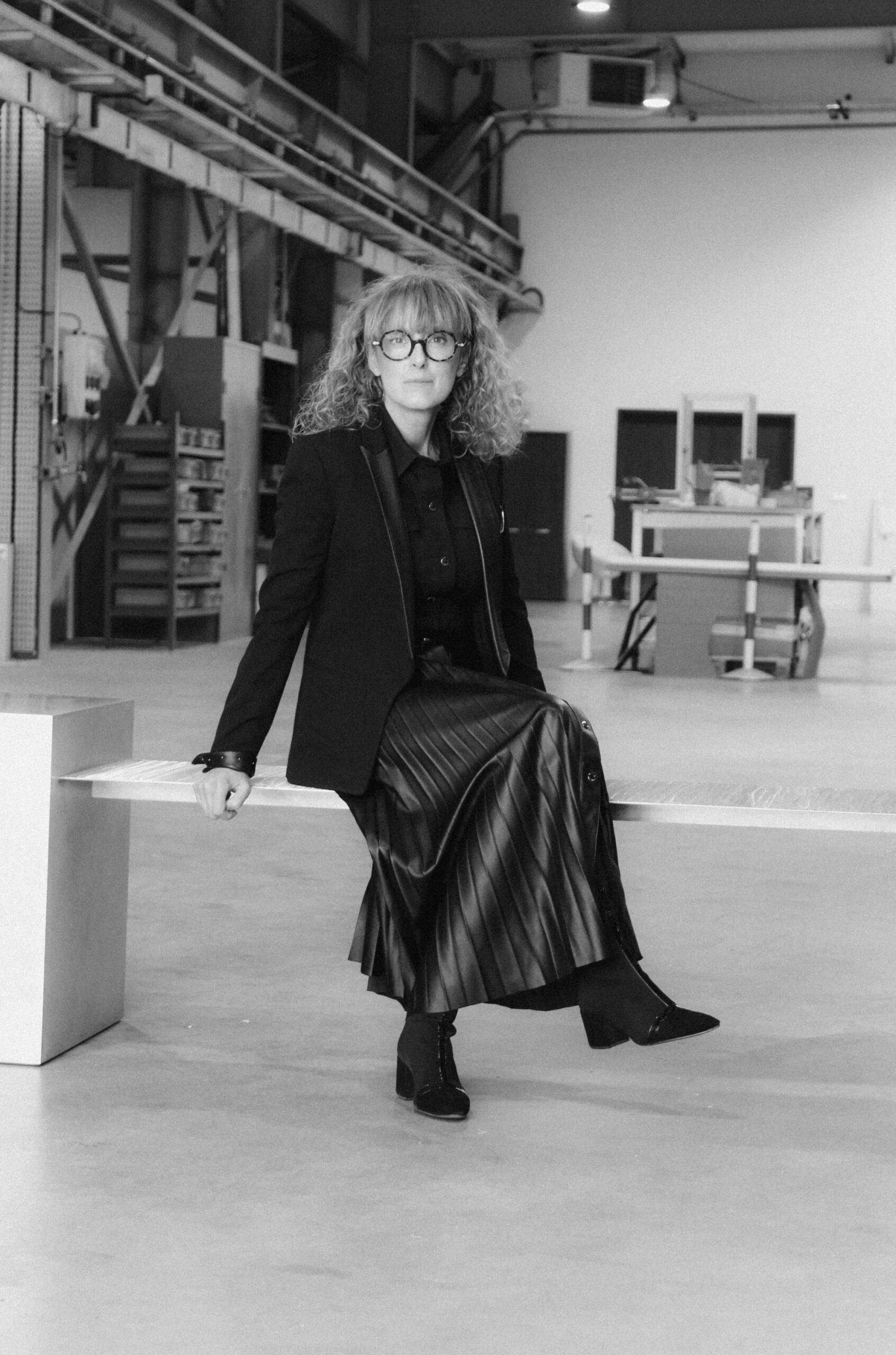
Founder of ERGANE, Anabele Silvestre grew up in an artistic environment, deeply attuned to materials, lines, and gestures.
She developed an early interest in manual work, which she envisions as a form of both personal and universal expression.
Fascinated by metal, she devotes herself to it with passion — a raw, dense, and living material.
She doesn’t follow trends; she observes them, diverts them, and reinvents them.
What drives her? The freedom to explore, to feel, and to experiment without constraint.
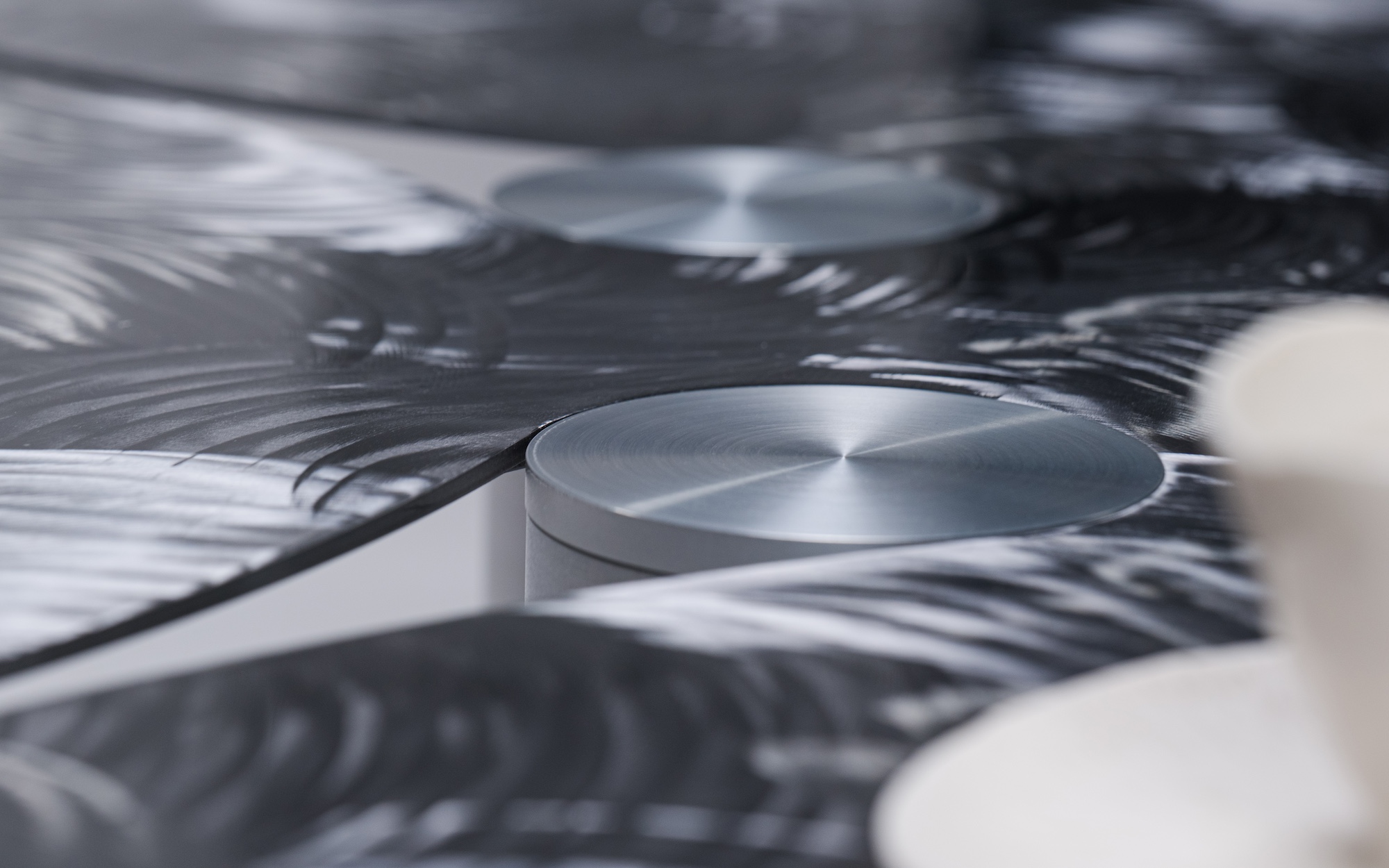
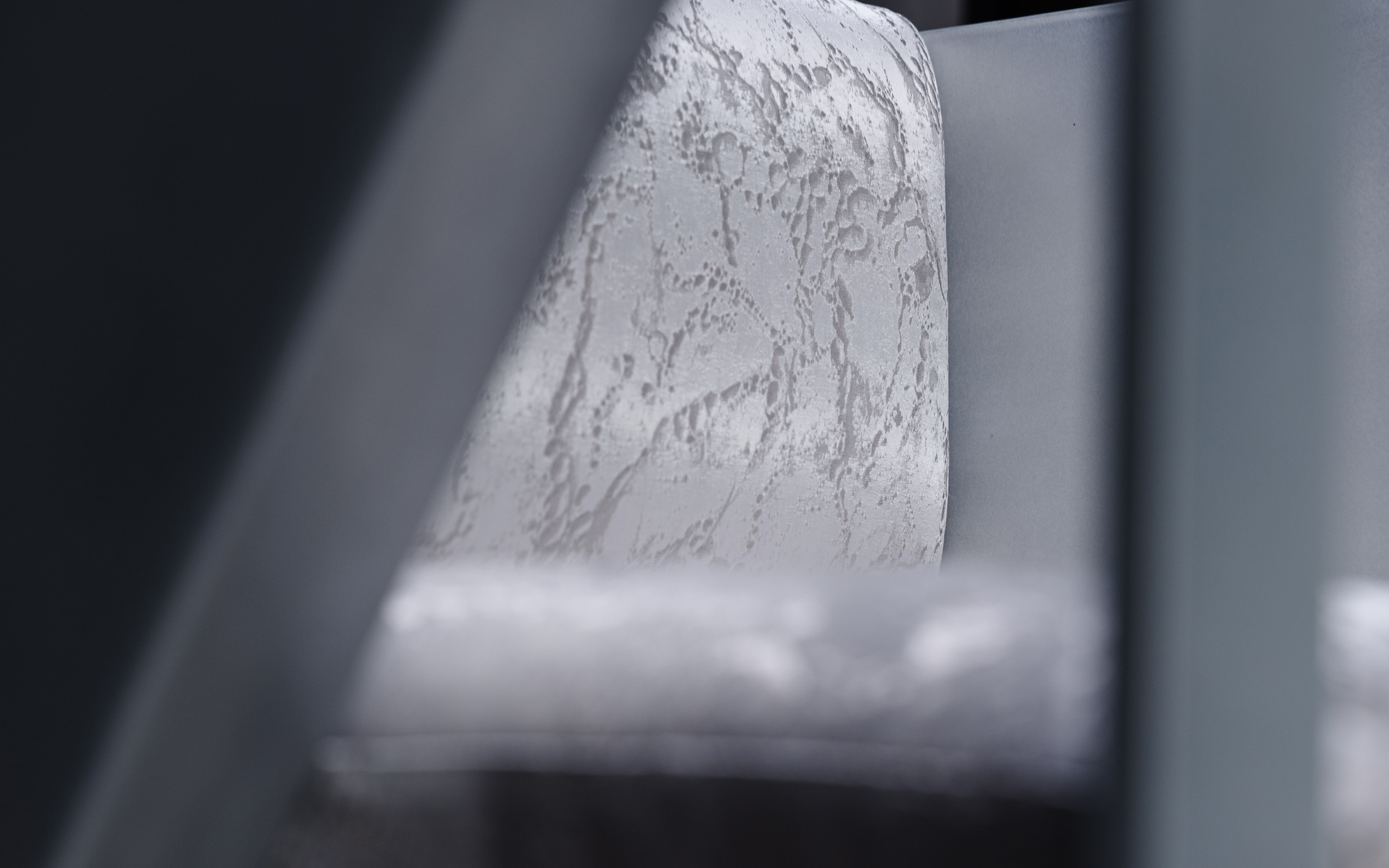
Each creation born from the workshop reflects this philosophy — a subtle balance between rigor and intuition, between mastery and sensitivity.
ERGANE draws its origin from Greek mythology, echoing the goddess Athena, also known as Athena Ergane — protector of artisans and craftsmanship.
One day, Athena challenged a young woman gifted in the art of weaving, convinced of her own superiority.
Yet, against all expectations, the young woman’s work surpassed that of the goddess.
Overcome with anger, Athena transformed her into a spider, condemning her to weave her web for eternity.
This myth resonates deeply with ERGANE’s DNA.
The spider’s web, seemingly fragile, is in fact a complex and resilient structure. It plays with emptiness — a founding element of the brand — where absence becomes strength, and minimalism, a language.
Through ERGANE, craftsmanship, innovation, and the exploration of space interlace to give life to creations that are both timeless and daring.
ERGANE was born from an intuition: what if furniture could become a language of its own?
A language that speaks not only to the eye, but also to the mind —
that moves through silence, reaching the body, the gesture, the emotion.
For ERGANE, an object is never limited to its function.
It becomes a form of expression, a bridge between what we experience and the world around us.
ERGANE evolves as a living studio — always in motion, in constant exploration.
Each piece is conceived as a fragment of a broader dialogue:
that of a responsible and embodied design.
The ERGANE logo is not static — it is conceived as a living system, a visual language of its own.
In this version, the logo is composed of two “E”s — one upright and the other inverted — forming a frame around the word “RGAN.”
This frame symbolizes the foundation, the structural base, discipline, and learning.
It serves as a reminder that every creation begins with a framework — a stable starting point.
Inside, “RGAN” expresses inner strength, the desire to build oneself, to gain experience, and ultimately to exist beyond the structure — to break free and find one’s own form.
In this version, the design breaks free: the letters “RGAN” emerge from the frame formed by the two “E”s, pushing beyond the closed shape and opening outward.
This logo embodies a pivotal stage in ERGANE’s evolution : the moment of stepping outside the frame. For while a frame is necessary, it must never become a boundary.
It structures, it guides, yet it must not confine. ERGANE now embraces this emancipation : the act of moving beyond imposed contours, breaking lines to experiment, to assert its freedom, and to explore new forms of expression.
These two logos do not oppose each other : they engage in dialogue.
They express ERGANE’s philosophy: Begin within a frame. Then, break free from it.
For it is within this duality, between grounding and transcendence, mastery and audacity, that the brand’s singular language is born.
ERGANE does not erase the structure : it steps away from it to draw its own path.
For ERGANE, each creation embodies a commitment, to the materials we work with, the craftsmanship we preserve, and the territories we strive to highlight.
Our creations are:
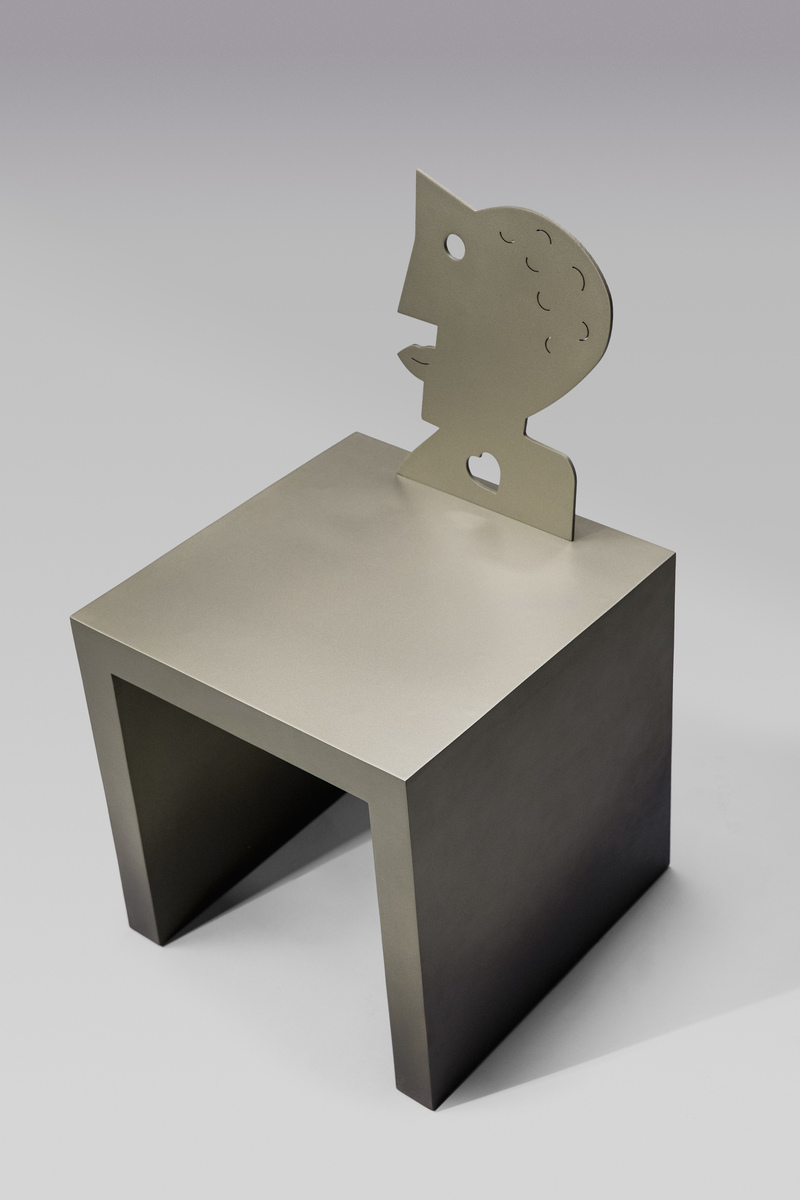
ERGANE does not seek to follow or impose trends. It creates objects that have something to say, objects that tell a story, a vision, an emotion.
Design then becomes a form of silent writing, where every curve, every texture expresses a thought.
What we stand for is a design that speaks, rooted in reality yet open to imagination. A design that does not separate form from thought.
A design that, like a language, can move, question, and tell a story.